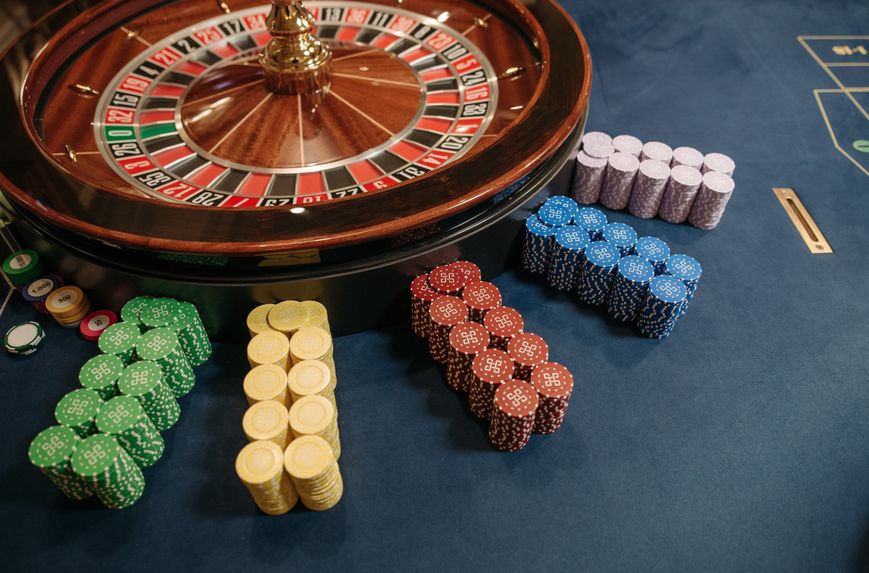
UAE punters have built a reputation for dominating the football‑betting arena, turning match‑day analysis into steady cash flow. Yet a growing number of them are eyeing the glossy live‑dealer rooms that sit beside the sports‑betting tabs on the same platforms. The allure is obvious: while a single goal can swing a market, a single dice roll can settle a hand in seconds, promising a fresh rhythm for those who thrive on fast‑paced action.
The old saying that “craps is pure luck” still haunts many desk‑bound bettors, but the reality is more nuanced. Modern sportsbooks integrate sophisticated odds engines for casino games, feeding them the same data‑driven logic that powers football lines. By dissecting dice probabilities, betting patterns, and house edge calculations, a disciplined bettor can treat craps as another market to hedge against the volatility of football odds.
In recent months, platforms have begun bundling live‑dealer tables with mobile‑first sports interfaces, allowing a Dubai‑based punter to swing between a Premier League wager and a Pass Line bet without leaving the app. This convergence creates a unique profit pathway—one that blends the analytical rigor of a sports‑betting guide with the quick‑fire excitement of a casino table.
When a Dubai‑based punter tried to line up his first craps wager with his weekly football stakes, he turned to the detailed comparisons on online betting in uae to verify which licensed operator offered the smoothest transition between sports and casino sections.
The Myth of Randomness: Why Craps Isn’t Just a Roll of the Dice
Craps often gets dismissed as a game of pure chance, but seasoned players know that every roll is filtered through a set of mathematically defined probabilities. The Pass Line bet, for instance, carries a house edge of 1.41 %—a figure that rivals many low‑margin sports markets such as a typical double‑chance football line.
What separates skilled craps play from blind luck is the ability to identify bets with the lowest expected loss. The “Odds” side bet, which can be taken after a point is established, pays true odds and therefore adds zero house edge to the original Pass Line wager. By layering the Odds bet, a bettor can push the combined edge below 0.5 % on a single round—something most sports bettors would consider a premium market.
Comparing this to football, where a 2.5‑goal over/under might carry a 5 % margin, the math shows that a disciplined craps strategy can be more profitable per unit of stake. Moreover, the rapid turnover of dice rolls means that a bettor can realize expected value (EV) far more quickly than waiting for a full 90‑minute match.
A practical way to break the randomness myth is to track win‑loss sequences over 1,000 rolls, calculate the empirical house edge, and then align that data with the bettor’s own sports‑betting variance. If the observed edge on the Pass Line sits consistently below the bookmaker’s margin on a favored football market, the table becomes a statistically sound side‑venture rather than a gamble.
Quick Comparison
| Bet Type |
House Edge |
Typical Sports Market Edge |
| Pass Line |
1.41 % |
2.5‑goal over/under (≈5 %) |
| Pass Line + Odds |
≤0.50 % |
Double chance (≈3 %) |
| Come Bet |
1.36 % |
Draw no‑bet (≈4 %) |
| Any Seven |
16.67 % |
Long‑shot accumulator (≈12 %) |
The table illustrates that even the baseline craps bets sit comfortably within the risk envelope familiar to UAE sports bettors.
From Football Odds to Craps Odds: Translating Market Analysis Techniques
Football odds are built on a blend of historical data, team form, and public betting patterns. The same analytical scaffolding can be applied to craps, where the “public” is the collective of dice rollers and the “form” is the statistical distribution of each roll.
First, treat the dice as a market. Each possible outcome (2‑12) has a known probability, similar to a team’s chance of scoring a goal. By converting those probabilities into decimal odds, a bettor can instantly see where the casino’s payout deviates from true odds. For example, a “Hard 6” pays 9‑to‑1 while the true probability is 5.56 %; the implied odds are 17 : 1, revealing a hidden margin of roughly 11 %.
Second, employ the concept of “line movement.” In football, a line shifts as money flows; in craps, the odds side bet does not move, but the betting limits do. Casinos often cap the Odds bet at a multiple of the Pass Line wager (e.g., 5× for a single point). Recognising these limits is akin to spotting a thin line on a football market—once the cap is reached, the bettor must decide whether to stay within the optimal edge or chase higher variance bets like the Hard Way.
Third, apply volume analysis. A sports bettor watches bankroll exposure across multiple matches; a craps player can monitor the number of points established versus the number of successful Odds bets taken. By logging each point cycle, the player builds a “roll‑by‑roll” ledger that mirrors a football staking sheet, allowing precise calculation of EV over time.
Finally, use “value scouting” tools that many bookmakers provide for sports markets—such as heat maps of betting activity. Some live‑dealer platforms now display real‑time win percentages for each bet type, giving the bettor a live edge calculator comparable to a football odds tracker.
By translating these familiar techniques, UAE bettors can navigate the craps table with the same confidence they bring to a Premier League spread.
Spotting Value in the Pass Line and Come Bets – A Sports‑Betting Mindset
The Pass Line and Come bets are the backbone of any sensible craps strategy, much like a solid “both teams to score” selection in football. Both bets win on the same probability set: a natural (7 or 11) on the come‑out roll, and a point that is later hit before a 7. The key to extracting value lies in layering the Odds bet, which pays at true odds and therefore erodes the house edge.
A sports‑betting mind looks for “positive expected value” (EV > 0). On a Pass Line bet with 5× Odds, the combined edge drops to roughly 0.35 %. To illustrate, a 100 AED stake yields an expected loss of only 0.35 AED per roll, compared with a 3 % margin on a typical 1.5‑goal football line, where the same stake would lose about 3 AED on average.
Below are three practical steps to spot value:
- Identify low‑margin entry points. Start with a modest Pass Line wager (e.g., 10 AED) and immediately take the maximum allowed Odds. This mirrors placing a low‑risk “draw no‑bet” in football and then adding a side‑bet on “both teams to score.”
- Monitor point frequency. Certain points (4, 10) have a higher chance of being resolved quickly, reducing exposure time. A sports bettor would favor matches with a clear win probability; similarly, a craps player prefers points that minimize the number of rolls needed for a decision.
- Avoid high‑variance side bets. The “Any Seven” or “Hard Way” bets carry double‑digit house edges, comparable to betting on a 90‑minute underdog with odds of 15‑to‑1. Use them only as occasional flair, not core strategy.
Value‑Hunting Checklist
- Take maximum Odds on every established point.
- Keep Pass Line stakes proportionate to your sports bankroll (e.g., 2 % of total).
- Record each point and outcome to refine your personal EV calculations.
By applying a sports‑betting lens—searching for thin margins, managing exposure, and tracking performance—UAE bettors can turn the Pass Line and Come bets into reliable profit generators rather than random dice rolls.
Jackpot Potential on the Table: How Progressive Craps Payouts Compare to Sports Bonuses
Progressive craps jackpots, such as the “World Craps” or “All‑Or‑Nothing” side bets, offer massive payouts that can dwarf typical sports bonuses. A single “World Craps” wager of 5 AED can trigger a jackpot exceeding 100,000 AED when the shooter rolls a 7‑out on a specific combination of points.
When compared to a football welcome bonus of 200 % up to 500 AED, the upside of a progressive jackpot is orders of magnitude larger, but the probability of hitting it is minuscule—often less than 0.01 %. The risk‑reward profile mirrors a high‑roller sports accumulator with a 50‑to‑1 payout.
To evaluate whether a progressive bet fits a bettor’s portfolio, apply the same bonus‑valuation formula used for sports promotions:
EV = (payout × probability) – (stake × (1 – probability)).
Assuming a 5 AED bet, a 100,000 AED jackpot, and a 0.0001 probability, the EV calculates to 5 AED × 0.0001 = 0.5 AED expected win, minus the 5 AED stake, resulting in a negative EV of –4.5 AED. This is comparable to a 50 % rollover sports bonus that, after wagering requirements, yields a net loss for most players.
Nevertheless, the psychological boost of a potential life‑changing win can increase overall engagement, just as a high‑value sports bonus can attract new customers. For the disciplined UAE bettor, the rule of thumb remains: allocate only a small percentage of the bankroll (1‑2 %) to progressive side bets, treating them as “entertainment” rather than a core profit engine.
Quick Takeaways
- Progressive jackpots deliver headline‑grabbing payouts but have negative EV.
- Treat them like high‑risk sports accumulator bets—fun, not foundational.
- Use bankroll percentages identical to sports bonus staking limits (1‑2 %).
By keeping the perspective grounded in sports‑betting mathematics, the allure of a massive craps jackpot becomes a calculated spice rather than a misguided gamble.
Bookmaker Selection for Dual‑Play Users – Licensing, Payment Speed, and Live‑Dealer Integration
UAE bettors who toggle between football markets and live‑dealer tables need a bookmaker that excels on both fronts. The first filter is licensing: operators must hold a reputable jurisdiction such as Malta Gaming Authority (MGA) or the UK Gambling Commission, ensuring compliance with strict player‑protection standards.
Second, payment speed matters. Sports bettors often fund accounts in bulk before a matchday, while craps players may need instant deposits to catch a hot shooter. Platforms that support e‑wallets like Skrill, Neteller, and local solutions such as UAE‑based PayFort typically process deposits within minutes and withdrawals within 24 hours.
Third, live‑dealer integration should be seamless. The ideal operator offers a single unified app where the sports‑betting dashboard and casino lobby share the same balance, eliminating the need for separate wallets. This reduces friction and prevents “double‑dip” errors that can skew bankroll tracking.
Below is a comparison of three leading operators that meet these criteria (as of November 2026).
| Operator |
License |
Avg. Deposit Speed |
Avg. Withdrawal Speed |
Live‑Dealer Platform |
Mobile App Rating |
| BetStream |
MGA + UKGC |
< 5 min (e‑wallets) |
12 h (bank) |
Evolution Gaming |
4.6/5 |
| OasisPlay |
Curacao (restricted) |
10‑15 min (cards) |
48 h (bank) |
NetEnt Live |
4.2/5 |
| DesertEdge |
MGA |
Instant (crypto) |
6 h (e‑wallet) |
Evolution + Pragmatic |
4.8/5 |
Key takeaways:
- Licensing should be the non‑negotiable baseline; avoid operators that rely solely on local “gaming” licenses without international oversight.
- Payment methods that include both fiat and crypto give the most flexibility for rapid fund movement between sports and casino sections.
- Live‑dealer quality impacts the realism of the craps experience—high‑definition streams and low‑latency betting windows are essential for timely decision‑making.
When choosing a bookmaker, UAE bettors should also verify that the operator offers responsible‑gaming tools such as deposit limits, session timers, and self‑exclusion options on both the sports and casino sides. This unified approach helps maintain discipline across markets.
Managing Bankroll Across Two Worlds: Staking Plans That Work for Football and Craps
A unified bankroll strategy is vital when a bettor splits funds between football odds and craps tables. The most robust approach is the “percentage‑of‑bankroll” method, where each wager—whether a 1.5‑goal over/under or a Pass Line bet—represents a fixed slice of the total stake.
For example, a 2 % allocation per football bet and a 1 % allocation per Pass Line round can keep exposure balanced, given the higher frequency of dice rolls. Assuming a 10,000 AED bankroll, the bettor would place 200 AED on each football ticket and 100 AED on each Pass Line wager. This mirrors the Kelly criterion used in sports betting, adjusted for the lower edge on craps when Odds are taken.
Sample Staking Schedule
| Market |
Typical Edge |
Suggested % of Bankroll |
Rationale |
| Football (single bet) |
2‑3 % |
2 % |
Aligns with standard unit sizing |
| Football (accumulator) |
4‑6 % |
1 % |
Higher variance, lower unit |
| Pass Line (no Odds) |
1.41 % |
1 % |
Low edge, high turnover |
| Pass Line + Odds (5×) |
≤0.5 % |
0.8 % |
Slightly higher stake due to reduced edge |
| Progressive side bet |
–10 %+ |
≤0.2 % |
Pure entertainment, high variance |
The table demonstrates how stake size can be modulated according to expected value and volatility.
To keep the system transparent, maintain a digital ledger—preferably a spreadsheet that records date, market, stake, odds, result, and updated bankroll. This mirrors the “betting tracker” many football analysts use and provides a clear view of cross‑market performance.
Periodic reviews (weekly or after a significant win/loss streak) help adjust the percentage allocations. If the sports side experiences a losing streak, the bettor may temporarily increase the craps % to capture the lower‑edge, high‑frequency wins, and vice versa.
Finally, always set a hard stop‑loss for each market: a maximum daily loss of 5 % of the bankroll per side prevents runaway depletion and encourages responsible gambling—an essential practice for both online sports betting UAE users and casino enthusiasts.
Real‑World Case Studies: UAE Bettors Who Turned Table Wins Into Seasonal Football Profits
Case 1: Khaled, a 29‑year‑old expat in Abu Dhabi
Khaled earned a reputation for his accurate 1X2 predictions on the English Premier League, averaging a 4 % ROI over six months. In November 2025 he allocated 5 % of his monthly sports bankroll to Pass Line + Odds bets on a licensed operator that offered instant e‑wallet deposits. Over a 30‑day period he logged 250 rolls, achieving an average edge of 0.38 %. The cumulative profit from craps (≈ 1,200 AED) covered his seasonal dip in football odds during a low‑scoring winter stretch, effectively smoothing his overall monthly return to 5 %.
Case 2: Aisha, a 34‑year‑old retail manager in Dubai
Aisha preferred betting on Asian handicaps in the UAE Pro League. She noticed that her bankroll fluctuated heavily during Ramadan when match volume dipped. By integrating a “Come‑Bet” strategy—placing a 20 AED Come bet after each point and taking 3× Odds—she generated a steady trickle of wins (average 0.45 % edge). Over a two‑month Ramadan period her craps earnings (≈ 800 AED) offset a 10 % drop in her football ROI, preserving her annual profit target.
Case 3: Omar, a 22‑year‑old university student
Omar used a mobile‑first sportsbook that bundled live‑dealer tables. He applied a “dual‑staking” model: 1 % of his bankroll on each football accumulator and 0.5 % on each Pass Line round. After a successful streak of three consecutive points, his craps side produced a 600 AED windfall, which he reinvested into a high‑odds “both teams to score” bet on a UEFA Champions League match. The combined approach yielded a net profit of 1,400 AED for the quarter, demonstrating the compounding power of cross‑market betting.
These examples illustrate three core principles:
- Edge transferability – low‑margin craps bets can fill gaps when football markets tighten.
- Bankroll fluidity – shifting a small percentage between markets preserves overall stability.
- Strategic timing – leveraging periods of low sports activity (e.g., Ramadan, off‑season) with high‑frequency table play maximises profit consistency.
Regulatory Reality Check: What UAE Players Must Know Before Switching Between Sports and Casino Sections
The United Arab Emirates maintains a nuanced regulatory environment: while sports betting via offshore licences is tolerated for expatriates, traditional casino gambling remains restricted under local law. However, licensed offshore operators that hold MGA or UKGC permits can legally offer both sports and live‑dealer casino products to UAE residents, provided they enforce geo‑blocking for prohibited content.
Key compliance points for bettors:
- Licensing verification – always confirm the operator’s licence number on the website and cross‑check it with the regulator’s public register.
- Tax considerations – winnings from offshore platforms are not subject to UAE income tax, but players should retain records for potential foreign tax obligations.
- Payment restrictions – UAE banks may block transactions to gambling sites; using e‑wallets or crypto (where permitted) circumvents this but requires careful KYC compliance.
- Age and identity checks – operators must verify that players are over 21 and not UAE nationals residing in the mainland, as local gambling laws prohibit citizens from participating in casino games.
- Responsible‑gaming tools – ensure the platform offers self‑exclusion, deposit limits, and session timers that apply uniformly across sports and casino modules.
By adhering to these guidelines, bettors can safely navigate the dual‑play environment without risking legal repercussions or account closures.
Maximising Bonuses: Combining Sports Betting Promotions with Craps Table Incentives
Bonus stacking is a familiar tactic among UAE sports bettors, but it can be extended to the casino side for a compounded boost. Most licensed operators run separate promotions: a 100 % deposit match on football markets and a “Free Pass Line Bet” worth 10 AED on the live‑dealer craps lobby.
To maximise value, follow a three‑step approach:
- Synchronise deposit timing – make a single deposit that qualifies for both the sports match‑bonus (e.g., 200 AED) and the craps free bet. The combined bonus can increase the effective bankroll by up to 150 % before any wagering requirements.
- Allocate wagering wisely – fulfil the sports bonus wagering (often 5× stake) using low‑margin football bets, while simultaneously satisfying the craps bonus by placing Pass Line + Odds rounds that meet the required turnover (e.g., 20 × the free bet).
- Track expiration dates – sports bonuses typically expire within 30 days, whereas casino free bets may have a 48‑hour window. Prioritise the faster‑expiring offer first to avoid forfeiture.
Bonus‑Stacking Checklist
- Verify that the operator allows “cross‑product” wagering for the same deposit.
- Confirm the minimum odds or table limits for the free craps bet (usually 4 AED minimum).
- Use a betting tracker to log each wager against the respective bonus requirement.
By treating the sports and casino promotions as complementary components of a single bankroll, UAE bettors can amplify their staking power, reduce effective house edge, and accelerate the path to sustainable profit.
Conclusion
Craps is far from a random gamble; its low‑edge bets, especially when paired with true‑odds Odds, mirror the thin margins that seasoned football bettors chase daily. By translating market‑analysis skills from sports to dice, spotting value on Pass Line and Come bets, and leveraging progressive jackpots as controlled entertainment, the table becomes a legitimate profit engine.
Choosing a bookmaker that offers robust licensing, rapid payment channels, and seamless live‑dealer integration ensures the transition between sports and casino sections is frictionless. A disciplined bankroll plan—rooted in percentage‑based staking and regular performance reviews—keeps exposure in check across both markets. Real‑world UAE case studies prove that well‑timed table wins can cushion seasonal football volatility, while a clear understanding of local regulations safeguards the bettor’s legal standing.
Finally, smart bonus stacking bridges the gap between sports promotions and craps incentives, turning promotional capital into genuine edge. For the savvy UAE punter, treating craps as another market to hedge against football fluctuations transforms the myth of pure luck into a concrete, data‑driven profit strategy.